The water shutoff notice residents actually read.
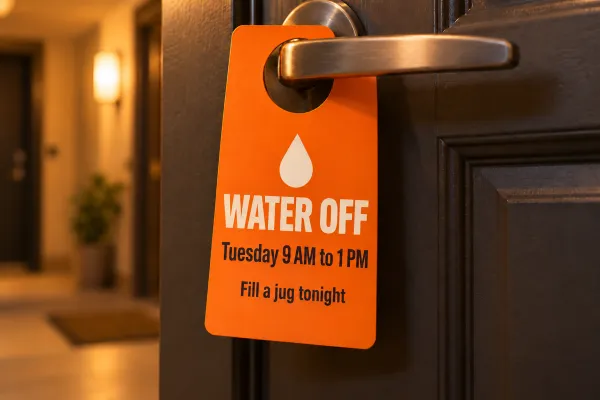
A water shutoff notice template: what it must say, when to send it, the day-before reminder, and what changes when it is an emergency.
The blog
Practical AI guides for property managers. Owner statements, after-hours requests and the files behind the work, with examples you can check and use.
All guides
Pick a topic, or start with the newest.
A water shutoff notice template: what it must say, when to send it, the day-before reminder, and what changes when it is an emergency.
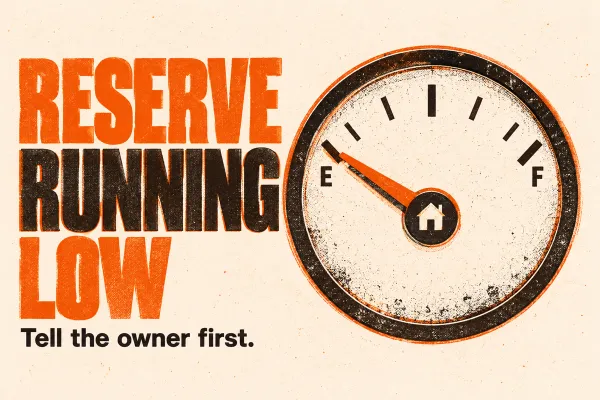
How to ask an owner to add funds when the reserve runs low or the balance goes negative: what to check, a request template and an AI prompt.
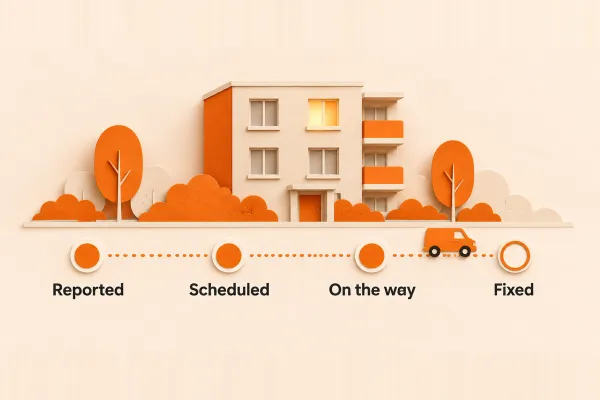
Work order update templates for each stage of a repair, what to say when a job stalls, and an AI prompt that drafts them from open work orders.
Replies to "is it still available", pet and price questions and tour requests, plus the listing facts every reply needs and an AI prompt.
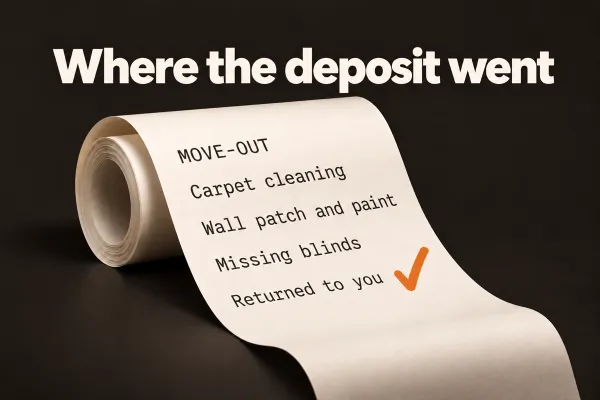
A security deposit deduction letter template: what to itemize, the evidence to keep, the deadline to check, and an AI prompt that drafts it.
Owner statements explained for property managers: what each section shows, the month-end checks, the questions owners ask, and how AI drafts the update.
How to answer a resident who disputes a late fee: what to check first, reply templates for when the fee stands and when it goes, and how to record it.
A tenant welcome letter template for move-in day: what residents need in the first week, the contacts and rules to include, and what to leave for later.
The AI tools a small property management company actually needs: a general assistant, the AI in your software, and a few jobs where an agent beats both.
Using AI in property management
A one-page AI policy template for a property management company: which tools staff may use, what data goes in, what a person must check, and who owns it.
An after-hours maintenance policy template: what counts as an emergency, who is on call, the response steps, and the short version for residents.
How to tell an owner about an expensive repair: what to have ready, the email template, how to present options, and how to get approval in writing.
A vendor scorecard template for property managers: what to score, where each number comes from, and how to raise a low score with a vendor.
A non-renewal letter template: what it must say, how to time it against the lease end date, the checks before it goes, and how to answer the reply.
A rent payment plan template for a resident who is behind: what the plan must say, how to set the instalments, and the checks before anyone signs.
The AI features inside AppFolio, Buildium and DoorLoop, compared from each vendor's own pages: what each does, which plan it needs, and what to test first.
Using AI in property management
20 AI prompts for property managers to copy into ChatGPT or Claude, by job: owners, maintenance, vendors, leasing, rent and residents. Plus the five parts.
A notice of entry template for routine visits, what every notice must say, the checks to run before sending, and where your state and lease set the rules.
When no hot water is an emergency, when it can wait until morning, the questions that decide it, and a reply you can send the resident tonight.
Owner update email templates for a routine month, a repair month and a bad month, what every update must contain, and how to draft one from a statement.
Seven vendor follow-up email templates for property managers: unscheduled jobs, missing invoices, no reply, estimates, new vendor intros and texts.
Lease renewal letter templates with a filled-in sample: rent increase, same rent, and the reminder. Plus when to send a renewal notice and what to check.
Late rent reminder templates: a friendly nudge, a fee notice and a final reminder, with a worked example, common mistakes and where a reminder must stop.
ChatGPT or Claude for property management work? How to choose, what to set up first, and what to check before any owner or resident data goes in.
The questions behind a follow-up call, a sample owner update, and what to check before sending.
Using AI in property management
Prepare your export, spot ambiguous data, and check the draft against the original.
How each urgency band is decided, what stays human, and the thresholds your firm must supply.
By topic
Statements, explanations, the calls they cause and the writing that prevents them. Feeds directly into the owner statement agent.
Classification standards, what to escalate, what can wait, and where the jurisdictional lines sit. Feeds into the after-hours agent.
Exports, models, prompts, and the guards that stop a helpful tool inventing a number. The part most people skip and then blame the tool for.
What you will not find here: generic AI commentary. If a post does not come out of an agent we built, a document we read or a test we ran, it does not get written. That is also why the posts carry dates, because an answer about software behaviour goes stale.
How this is written
A guide gets written when building or testing an agent teaches us something a property manager would want to know. There is no content calendar behind it.
So every guide can point at what it came from. The after-hours guide exists because an agent asked residents too many questions and had to be capped. The export guide exists because the vendor documentation said something different from what most people assume. The owner statement guides exist because the same complaint shows up in public software reviews in almost the same words.
If a figure is not something we measured or can cite, it does not appear. We would rather publish a gap than a confident guess.
Notice periods, fee rules and habitability standards vary by state and city. Where one comes up, we point you to your lease, your local rules or your adviser.
Software changes, exports change and rules move. A guide is only useful if you can see when it was checked.
The guides grow with the agent library: renewals, rent collection, vendors, owner communication and the AI setup behind all of it. If a question keeps coming up for you and it is not answered here, tell us. The queue follows what property managers actually ask.
Most of what is written here came out of building it. The owner statement agent is free, MIT licensed, and published with all 159 of its test runs.
Or see every agent in the library.